
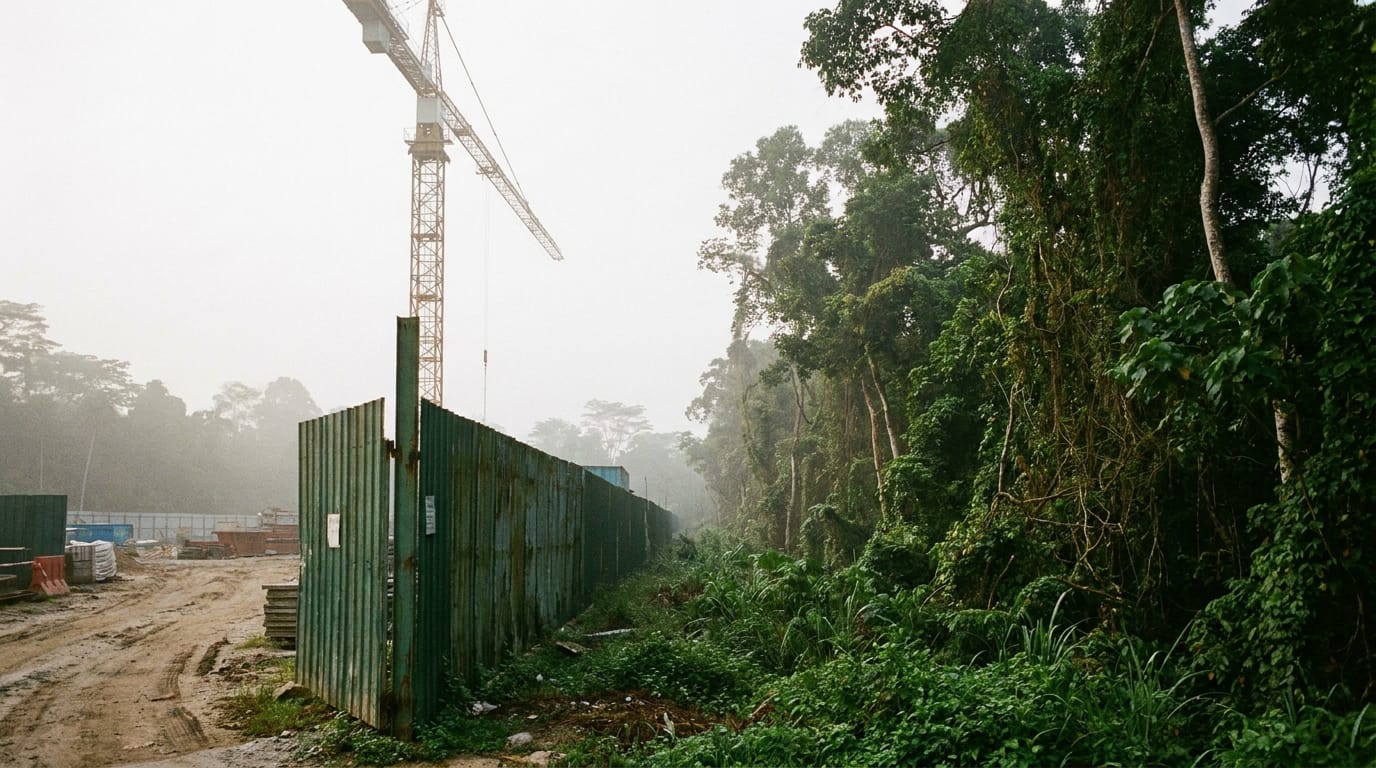
An Environmental Monitoring and Management Plan (EMMP) is the site document that sets out how a construction project will monitor and manage its effects on nearby wildlife, habitats and the wider environment, from baseline surveys before works begin to a close-out report at completion.
As development in Singapore moves closer to nature reserves, park connectors, waterbodies and green corridors, URA and NEA increasingly attach environmental monitoring and management conditions to planning approvals. The EMMP is how a project meets those conditions on the ground.
For main contractors and developers encountering the requirement for the first time, here is what it means in practice.
When is an EMMP required?
There is no single trigger; the requirement arrives through your planning conditions or agency correspondence. Common situations include works adjacent to nature reserves and nature parks, projects along green corridors or waterbodies, sites with significant existing vegetation or recorded wildlife activity, and projects where an earlier ecological study recommended construction-phase safeguards.
If your approval mentions environmental monitoring, wildlife management measures or an EMP/EMMP, the safest first step is to have the conditions reviewed by a consultant who prepares and implements these plans. The scope can often be right-sized before it is priced.
What a good EMMP contains
An EMMP translates agency conditions into a working site document. The core components:
- Pre-construction baseline: surveys of wildlife, habitats and site conditions before works begin, against which everything later is measured.
- Monitoring programme: what is monitored (wildlife activity, habitat condition, ecology-relevant noise and dust interfaces), how often, by whom.
- Wildlife management measures, including shepherding protocols for vegetation clearance, so animals are moved safely ahead of the works front.
- Incident response protocols: pre-agreed procedures for wildlife encounters, injuries and environmental incidents.
- Reporting framework: periodic monitoring reports during works and a close-out report documenting compliance at completion.
The part that matters: implementation
Agencies do not just want a document; they want the document followed. This is where many projects stumble: the plan was written by one party, priced by another, and implemented by whoever is available. Monitoring visits get missed, shepherding is improvised on clearance day, and the paper trail falls apart just when an incident makes it matter.
The most reliable arrangement is a single accountable team that writes the plan, establishes the baseline, conducts the monitoring and provides the trained wildlife officers. Commitments made in the plan are then commitments the same team must keep on site.
Timing and programme impact
Plan for the EMMP early. The baseline must be established before site clearance, agencies generally expect the approved plan in place before mobilisation, and some baseline surveys have seasonal timing considerations. Engaged early, an EMMP rarely delays a programme; engaged late, it can hold up clearance works.
The takeaway
An EMMP done well protects both the environment and your programme. ESC develops and implements EMMPs end-to-end (baseline, monitoring, wildlife shepherding and reporting) for contractors and developers across Singapore.